How to Prepare Your Cat for Boarding: A Practical Checklist
First time boarding your cat in Singapore? A two-week checklist: the health records to bring, carrier training, what to pack, and what the first night looks like.
By Charlotte · Founder••7 min read
Start two weeks out. Find your cat's vaccination, sterilisation and FIV/FeLV test records, leave the carrier open in the hallway with a worn t-shirt inside, book a tour so drop-off isn't the first visit, and pack the food your cat already eats. That fortnight does more for your cat's first night than anything we can do once they arrive. The cats who settle fastest at Kuro are usually the ones whose owners started early. This is the checklist I give every first-time owner who asks.
How far ahead should you prepare your cat for boarding?
Two weeks before: get the health records together
Every hotel sets its own admission rules, so check them early. A missing record found on the morning of drop-off is hard to fix. At Kuro we ask for these at or before check-in:
Proof of the core vaccines (FVRCP), either a current booster or a VacciCheck antibody titre. Kittens need at least one core vaccine and must be 10 weeks or older.
Sterilisation for cats eight months or older.
An FIV/FeLV test result. A negative result, with your consent, gives your cat access to the shared play area; a positive cat can still board in its private suite.
Parasite prevention is given at check-in. You can buy the dose from us or bring an unopened, sealed one from our approved list. A cat can be refused admission without these records, so if you are unsure, book a vet check now. Many owners lose track between annual visits. The full list is on our boarding terms page.
Two weeks before: leave the carrier out
Leave the carrier out in the living room with the door open, and put a familiar blanket or worn item of clothing inside. Let your cat explore it in their own time. It stops being a signal for a vet trip and becomes just another thing in the room, which makes drop-off day much less stressful.
One week before: book a tour of the facility
If the hotel offers tours, bring your cat along. A visit beforehand lets them take in the scent of the place with you right there, so there is no separation to cope with. Cats who have visited before usually settle faster on their first night. (We run hotel tours by appointment at Kuro.)
A few days before: fill in the care plan form
Good boarding hotels ask for a detailed intake form covering feeding schedule, food brand and quantity, medical conditions, medications, known triggers and emergency contacts. Fill it in properly: the more the team knows, the less of the stay is guesswork. At Kuro the care plan is where the food brand and portion, the feeding times, the hiding spot to expect and your vet's number get written down, and long-stay guests keep the same suite and the same small team from first night to last.
The day before: pack your cat's things
Familiar scents comfort a cat in a strange place, so pack a worn t-shirt or pillowcase. Bring their usual food, same brand and format they eat at home. Changing their food mid-stay just adds stress for no reason. Pack a favourite toy or two, but leave anything you would be upset to lose.
What should you pack for a cat boarding stay?
Essentials:
Sufficient food for the entire stay (same brand)
Any medications with written instructions
Comfort items:
Unwashed clothing item
One or two familiar toys
Regular blanket or bed if space permits
Pheromone spray for the carrier (optional)
Leave at home:
Expensive or irreplaceable items
New toys (unfamiliar scents don't provide comfort)
Large furniture pieces
Tell the team:
Your cat's favourite hiding spots
Stress indicators specific to your cat
How they respond to strangers
Known food allergies or sensitivities
What happens on drop-off day?
The most important thing you can do is stay calm yourself. Cats pick up on emotional states through scent and body language, so a calm owner makes for a calmer drop-off.
Keep the goodbye short. A long, anxious farewell tells your cat something is wrong. Hand your cat to the team, give any last notes out loud, and leave. Most cats who look distressed at drop-off settle within the hour once their owner is gone.
If the hotel has live webcam access, try not to check obsessively in the first few hours. Give your cat time to explore and settle before you start watching.
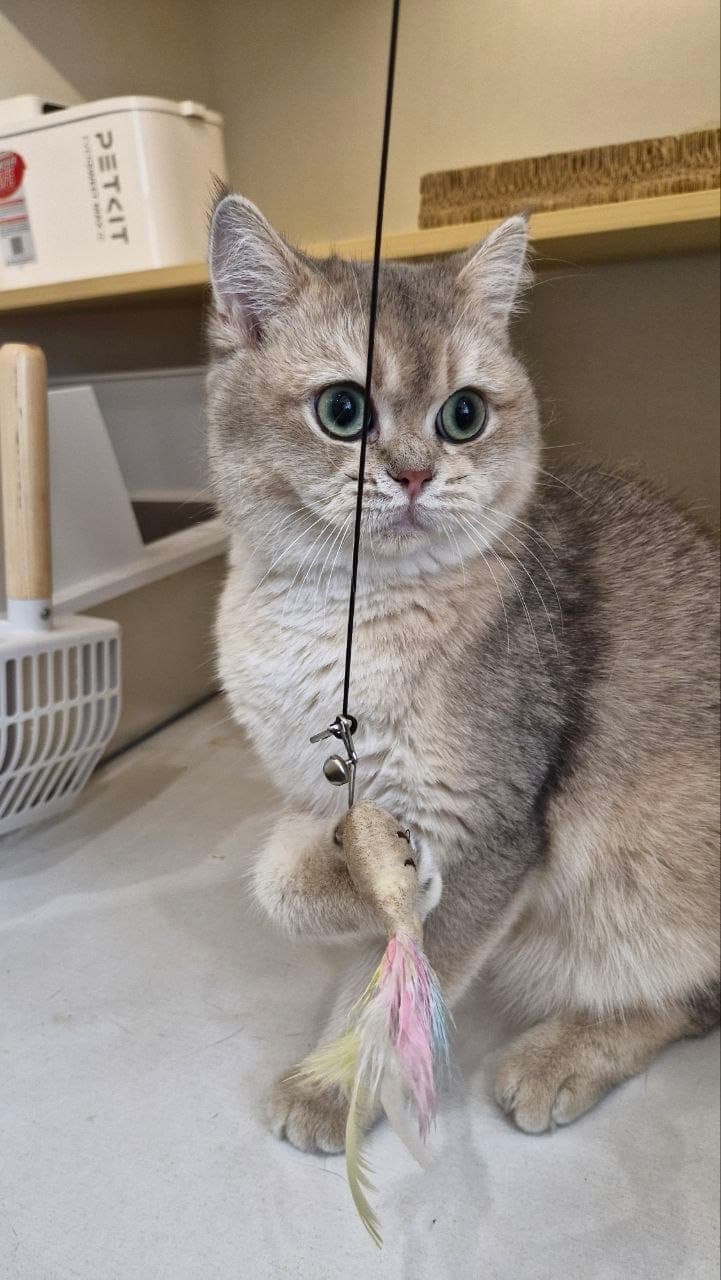
A first play session goes at the cat's pace: paw first, commitment later.
What is normal in the first 24 hours?
Most cats spend the first few hours sizing up their suite: sitting quietly, hiding behind the bedding, or exploring slowly and carefully. That is normal, not distress. If you want a sense of what a calmer first night looks like in practice, our approach to Fear Free boarding walks through it.
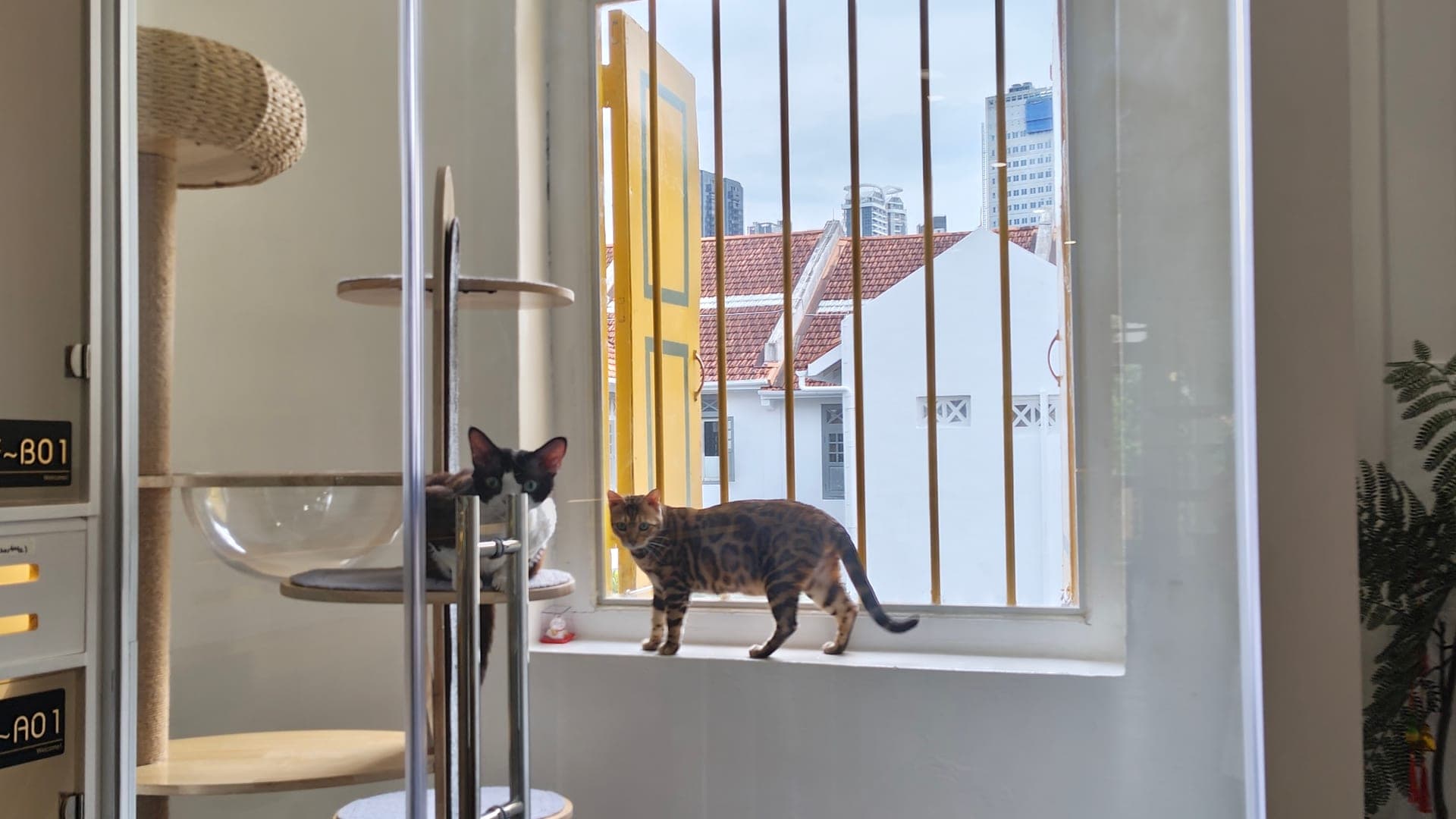
Day two, usually: out of the suite doorway to ask the corridor what it has to offer.
Your pre-boarding checklist
Vaccination records ready (FVRCP booster or titre)
Sterilisation record ready (cats eight months and older)
FIV/FeLV test result ready
Parasite prevention sorted: buy at check-in or bring a sealed dose
Carrier left out at home for 1+ weeks
Facility tour booked and completed
Care plan form filled thoroughly
Full-stay food supply packed (same brand)
Medications packed with written instructions
Worn clothing item packed
One or two familiar toys packed
Emergency vet contact shared with facility
Webcam login received and tested
Facility WhatsApp saved to phone
Drop-off time confirmed with facility
This checklist assumes a trip. If what is coming is a change at home rather than a departure, preparing a cat for a new baby runs on a different timeline, and starting early matters even more there.
Frequently Asked Questions
1How far in advance should I prepare my cat for boarding?▼
Start two weeks before drop-off. That is long enough to confirm the FVRCP vaccination is current, to leave the carrier out at home with a worn t-shirt inside so it stops reading as a vet trip, and to visit the hotel with your cat in the week before the stay.
2What should I pack for my cat's boarding stay?▼
Pack enough of your cat's usual food for the whole stay in the same brand and format, any medication with written instructions, an unwashed item of your clothing, and one or two familiar toys. Leave new toys and anything irreplaceable at home, and tell the team about hiding spots, stress signals, and food sensitivities.
3Is it normal for a cat not to eat at a cat hotel?▼
A reduced appetite on the first day is common and not by itself a cause for concern; many cats do not eat within the first 12 hours of arrival. A cat that has not eaten for 36 hours warrants a call to the facility, and a well-run hotel will usually have flagged it to you before you ask.