Cat Boarding in Singapore: A Complete Guide (2026)
How to choose a cat hotel in Singapore: licensing, private suites, Fear Free care, costs, and what to prepare. An honest, practical guide from a cat-only team.
By Charlotte · Founder••7 min read
Cat boarding in Singapore ranges from converted dog kennels with cats stacked in shared cages to quiet, air-conditioned private suites with daily play and photo updates. The price gap between the two is real. The welfare gap is bigger. This guide explains how to tell them apart, what a good stay should cost, what the law requires, and how to prepare your cat, written by a cat-only team who does this every day.
If you only remember one thing: a cat is not a small dog, and a cat hotel is not a small kennel. Cats manage stress by controlling their environment. The whole job of good boarding is to give that control back to them while you are away.
Cat hotel or cat sitter: which does your cat need?
Both are valid. They solve different problems. A cat sitter comes to your home once or twice a day to feed, scoop litter, and spend time with your cat. Your cat keeps its own territory, but for most of the day no one is watching. A cat hotel means your cat stays at a facility with eyes on it through the day. You lose the home-territory advantage but gain structure, faster response to problems, and, at the better places, a vet relationship and live cameras.
As a rough rule: a sitter is often better for very short trips or a genuinely fearful cat that has never left home. Boarding usually wins for trips of five days or more, for renovations and moves, and for senior cats or cats on medication, where daily observation matters more than familiar walls. We compare the two in detail in cat hotel vs cat sitter in Singapore, and our cat sitter alternative page lays out honestly when each one wins.
What a licensed cat hotel must have in Singapore
Pet boarding in Singapore is regulated. Any facility taking your cat overnight for payment must be licensed by the Animal & Veterinary Service (AVS), a cluster of the National Parks Board. Before you book anywhere, confirm three things: the business holds a current AVS pet-boarding licence (they will show a licence number; if you cannot find one, ask); the premises match the licence address; and vaccination and health checks are required of every guest, not just yours. A licence only confirms the legal minimum.
One thing to plan for in 2026: Singapore is introducing cat licensing under the new Pet Animal Licensing System (PALS), so pet cats will need to be licensed and microchipped, with the scheme phasing in through 2026. Check AVS for the current timeline, or ask us; we are already helping guests get their paperwork ready.
How to choose a cat hotel: the checklist
Use this on your visit, and you should visit before you book:
Cat-only, always. Cats read the sound and smell of dogs as a standing threat.
Private suites, never shared cages. Own enclosed space for the whole stay; same-home cats can share.
Fear Free or equivalent handling. Science-based training to read and reduce fear, anxiety, and stress.
Climate control, not just a fan. 24/7 air conditioning is non-negotiable at the premium end.
Live camera access. A 24/7 webcam you log into yourself.
Real daily updates, covering appetite, litter, and mood, not stock photos.
A working vet relationship, with a named partner vet and a clear protocol.
They feed your food, on your schedule.
They will tell you if your cat is not a fit, even if it costs them the booking.
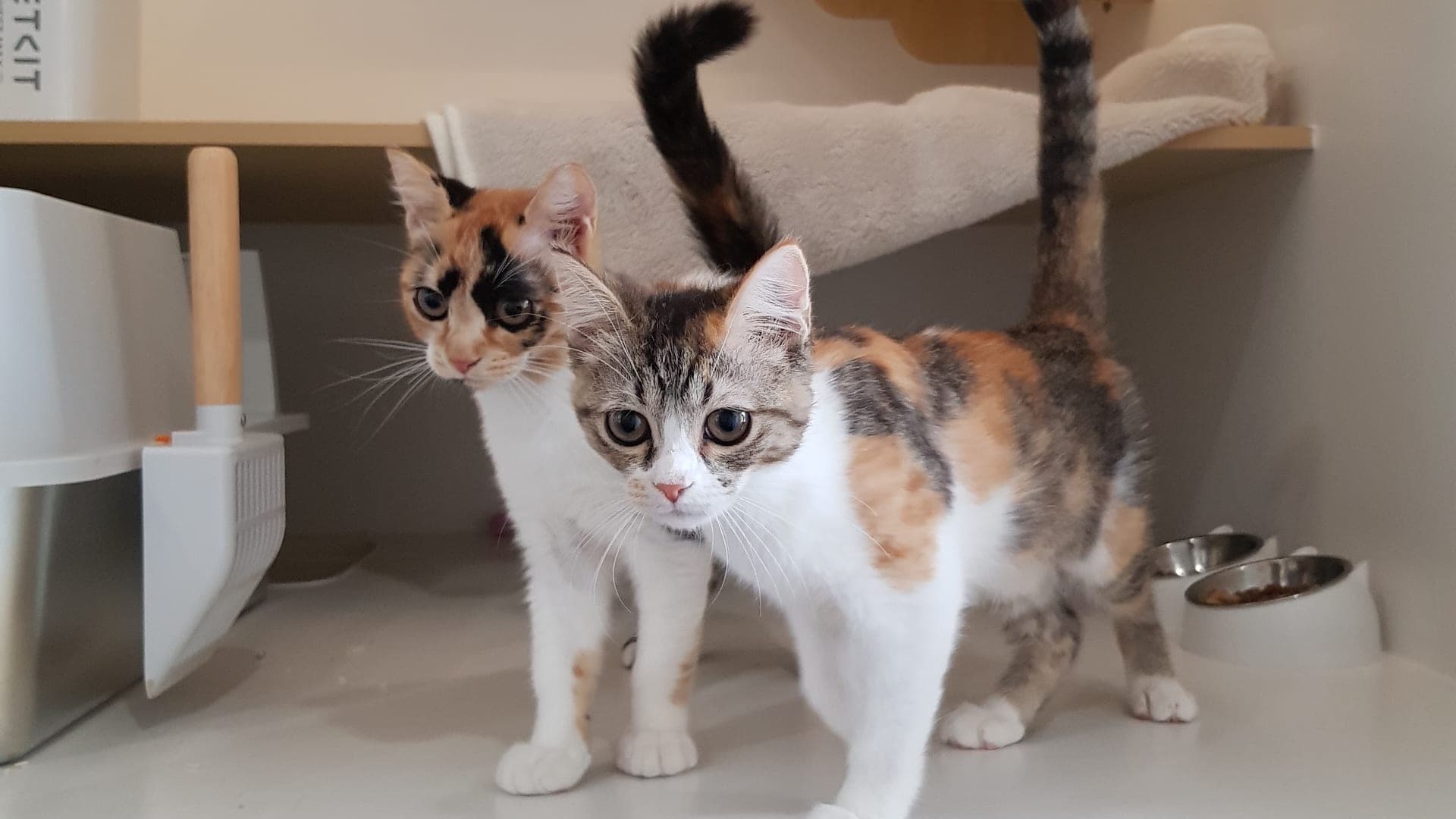
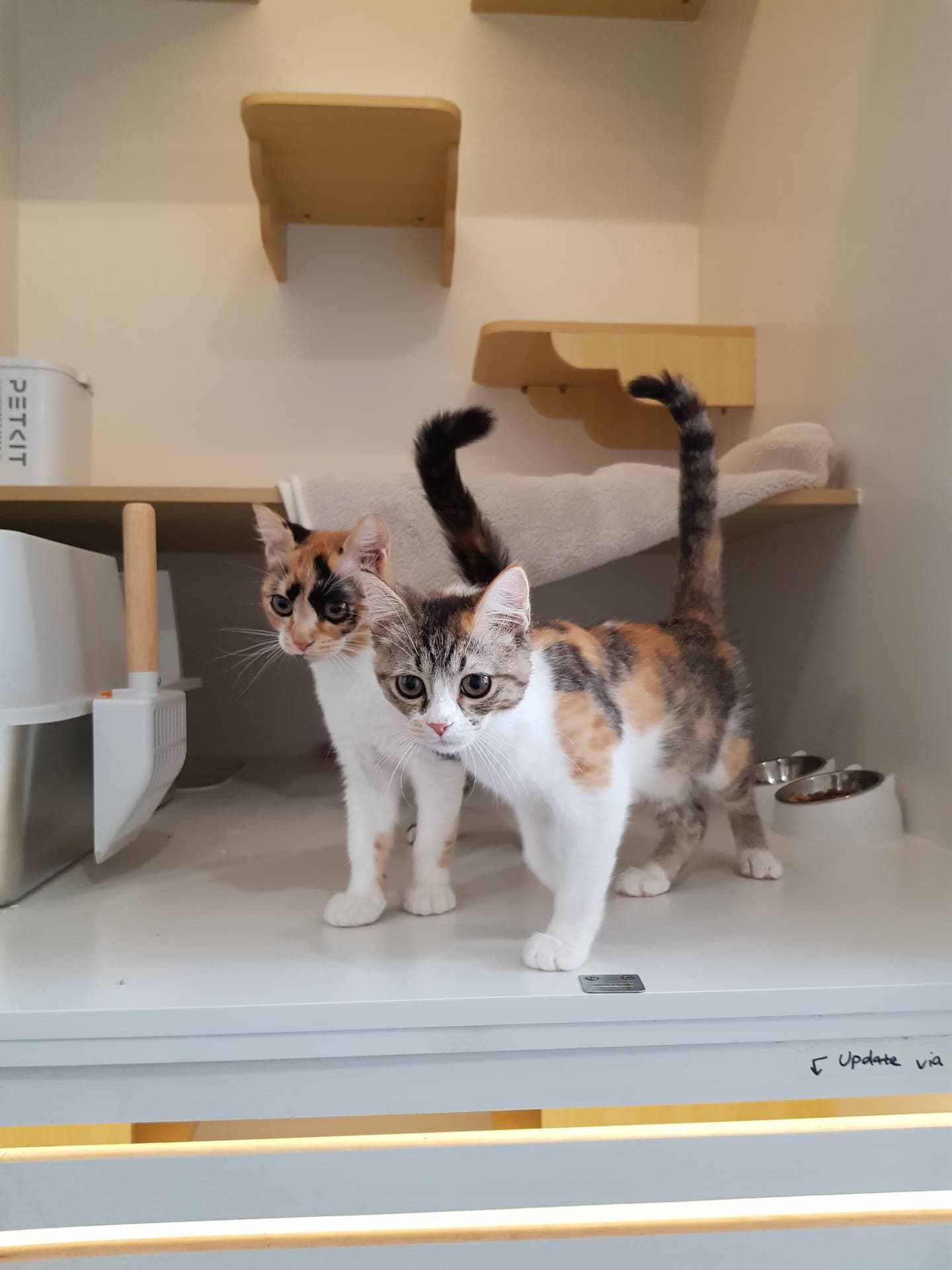
Every guest gets its own private suite with full climate control and 24/7 camera access.
What cat boarding costs in Singapore (2026)
Per night, for one to two cats; most hotels add around S$20 per extra cat.
Tier
Rate / night
What you get
Budget / shared
S$25–40
Cages or shared rooms, fan-cooled, basic feeding. Often dog-and-cat premises.
Mid boutique
S$45–60
Private or semi-private rooms, some air conditioning, daily updates.
Premium suites
S$60–120
Cat-only, private air-conditioned suites, Fear Free handling, live cameras, vet relationship.
Many hotels add a 20–40% surcharge over peak periods (Chinese New Year, Christmas, and the June and December school holidays), so book four to eight weeks ahead. Kuro's rate stays the same all year, with no peak surcharge; you can see it on the pricing page.
Requirements before your cat can board
Multiple cats from the same household can share a suite. Enrichment and vertical space are standard in all rooms.
How to prepare your cat for boarding
Reintroduce the carrier early by leaving it open at home for a week or two. Pack familiar food and a home-scented blanket. Write down the routine and any medication. Visit first, so the place is not brand new on the day. And do not rush check-in. A calm, unhurried handover helps.
Long-term boarding is a different problem
For stays of two weeks to several months, what matters most is continuity: the same suite kept for the whole stay, the same handler, the same feeding rhythm, and weekly weigh-ins that flag any drop above about 5%. Ask about suite continuity and weight tracking, not just the nightly rate. Kuro runs a dedicated long-term cat boarding programme for exactly this.
Red flags to walk away from
No licence number, or evasiveness about it. Dogs on the premises with no real separation. Shared or stacked cages sold as "suites". No air conditioning. No clear medical-emergency answer. Pressure to book without a visit. Any one of these is a reason to keep looking.
Where Kuro Cat Hotel fits
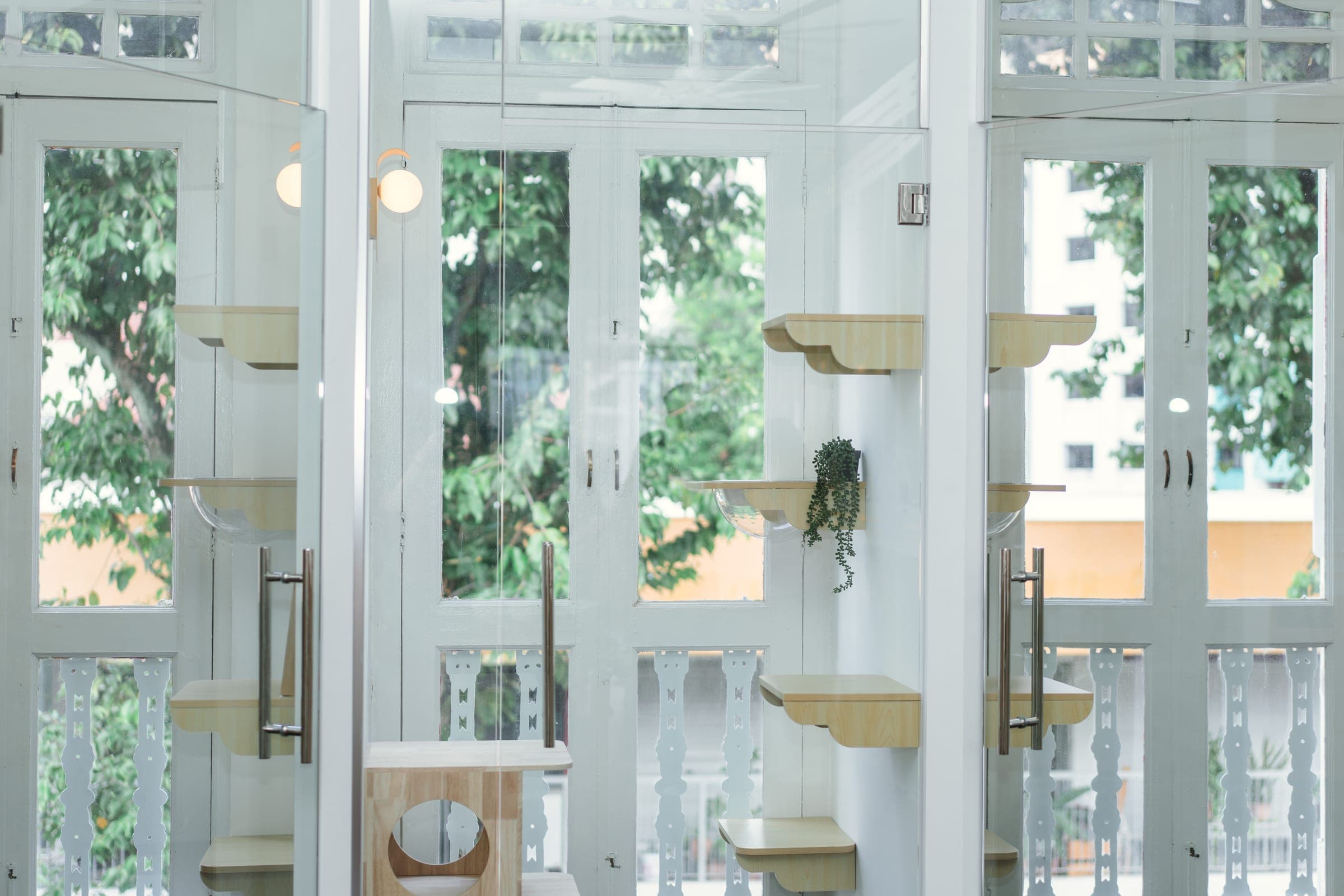
We built Kuro around the checklist above. It's cat-only, in a heritage Chinatown shophouse two minutes from Maxwell MRT. Every suite is private, with no shared spaces, Fear Free certified handling, air conditioning throughout, and a webcam you control yourself. Our care follows the AAFP and ISFM Feline Environmental Needs Guidelines, we keep long-stay guests in the same suite with the same small team, and we are AVS licensed (Pet Boarding Licence BD26004). Complimentary two-way pet taxi is included for bookings of five nights or more. We'll also tell you if a home sitter suits your cat better than we would.
Expect roughly S$25 to S$40 a night at budget shared facilities, S$45 to S$60 at mid-range boutiques, and S$60 to S$120 for cat-only private suites with air conditioning, Fear Free handling, and live cameras. Most hotels add about S$20 per additional cat, and peak periods carry surcharges.
2How far ahead should I book cat boarding?▼
Four to eight weeks for normal periods, and earlier for Chinese New Year, Christmas, and the June and December school holidays, when suites fill first and surcharges apply.
3Is a cat hotel or a cat sitter better?▼
A sitter keeps a cat at home and visits on an agreed schedule. A hotel provides a separate boarding environment with its own staffed hours and services. Compare the actual arrangements available for your cat.
4What does my cat need before boarding in Singapore?▼
Up-to-date FVRCP vaccination, an FIV/FeLV-negative result for shared play-area access (positive cats can still board in a private suite), sterilisation for cats eight months and older, parasite prevention (given by us at check-in, or proof of treatment within the past 30 days), and your vet's contact with written treatment authority.
5How do I check that a cat hotel is licensed?▼
Ask for the AVS pet-boarding licence number and confirm the premises match the licence address. Reputable operators display it openly; Kuro Cat Hotel's is BD26004.
6Can two cats share a suite?▼
Yes, if they are from the same home and comfortable together. Our Sky Villa holds up to three cats and the Premium Villa up to five, with an additional-guest fee per extra cat.
7How should I prepare my cat for its first stay?▼
Leave the carrier open at home beforehand, pack familiar food and a home-scented blanket, note the routine and medication, and visit the facility first so check-in day is not the first time your cat sees it.
8Can I check in on my cat during the stay?▼
At a good cat hotel, yes. You should have 24/7 webcam access you control yourself, plus real daily updates on appetite, litter, and mood.
9Do you take senior or medicated cats?▼
Yes. Send the prescription, written schedule and vet contact before booking so the care arrangements and staffed hours can be confirmed.