Is Boarding Stressful for Cats? What Actually Happens and What Helps
Is cat boarding stressful? Some unease on day one is normal. What it looks like, when to worry, and what a good Singapore cat hotel does to keep it small.
By Charlotte · Founder••7 min read
Any change of place is a lot for a cat, and a boarding stay is a change of place. Most healthy adult cats find the first day unsettling, then ease into the routine within a day or two. What decides how hard it is has less to do with your cat's temperament than with the hotel: whether the room is private, whether it is quiet and cat-only, whether the people handling your cat know how to read a nervous one. I run a boarding floor inside an old Chinatown shophouse, and this is how I would answer the question if you asked me across the counter.
What does stress look like in a boarding cat?
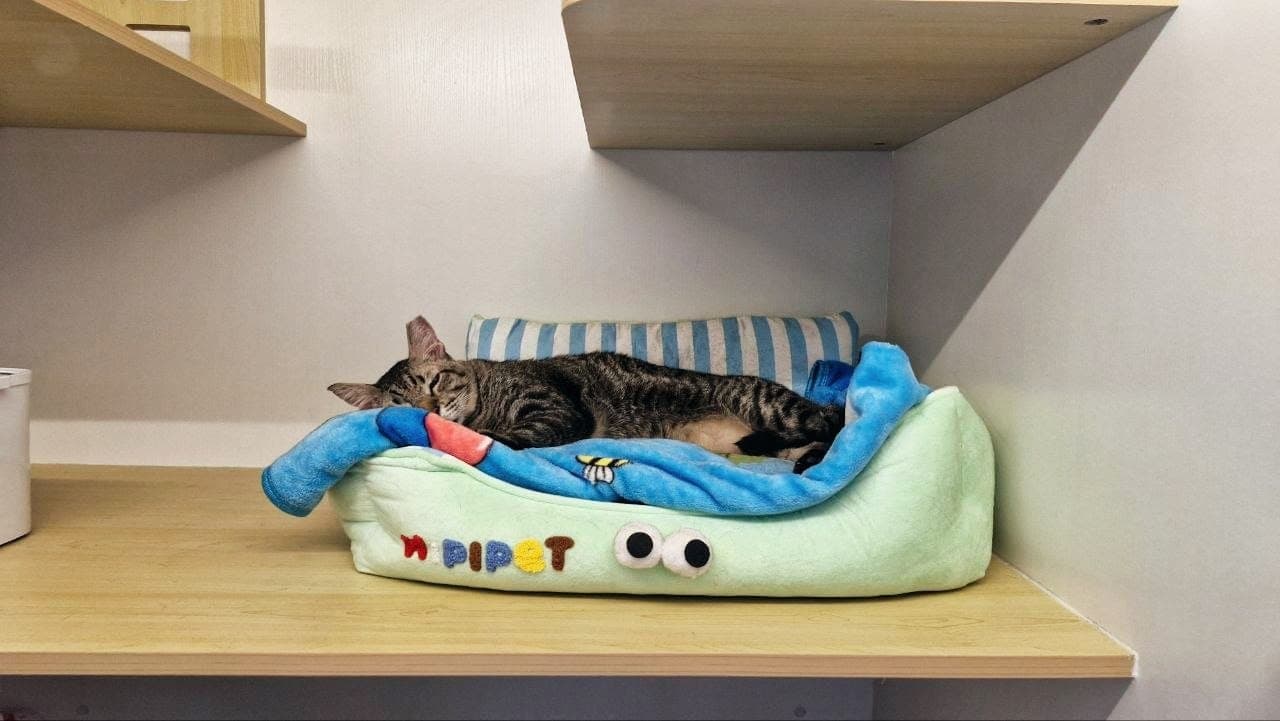
Cats do not announce discomfort. They go quiet. In the first hours you may see a cat that stays low in one corner, hides under the bedding, eats less than at home, or watches the room without moving much. Pupils can stay wide, and a cat may groom in short bursts or not at all. None of that means the stay has gone wrong. Your cat is working out a new room, and that takes a few hours.
What matters is the direction over the next day. A cat that begins to explore, eat and use the litter tray is settling. A cat that stays frozen, refuses food, or stops using the litter tray is not, and the team should be telling you about it before you ask. At Kuro the team looks at posture, whiskers, tail carriage and breathing at each check, and a cat that is not coming round gets a call to the owner.
Why do some cats find boarding harder?
Cats read their world by scent and sound, and a new place is full of both. Other animals are the biggest factor: barking, or the scent of dogs, stresses a cat even when the animals are in separate rooms, which is why a cat-only building matters. Strange smells come next. A suite that smells of harsh cleaning products or of other cats is hard to settle in, and bedding from home helps more than people expect. Constant footfall and loud corridors keep a cat on alert. Being lifted or restrained without warning teaches a cat that boarding is something that happens to it. And a cat with no hiding place cannot calm itself.
Some cats are more at risk: kittens, seniors, cats with a medical condition, and cats who have had a rough stay somewhere else. If your cat is on regular medication, read our note on boarding with medication before you book.
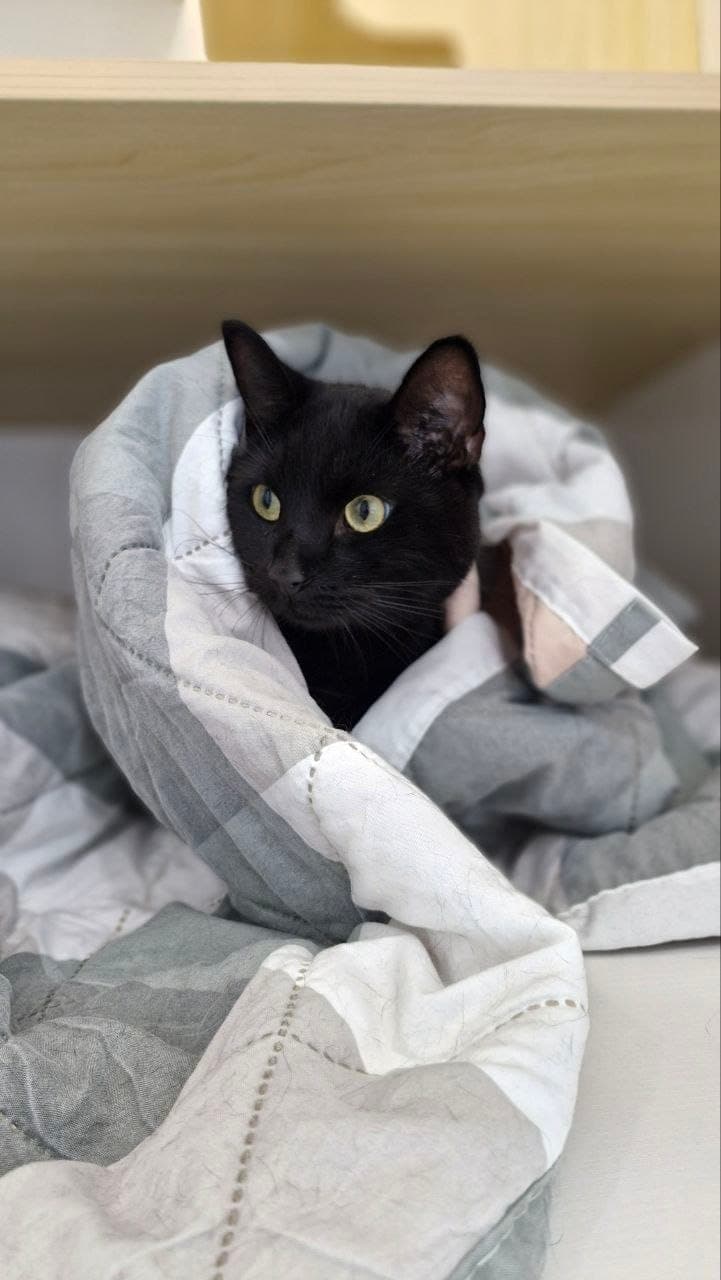
A cat burrowing into the bedding is usually settling in.
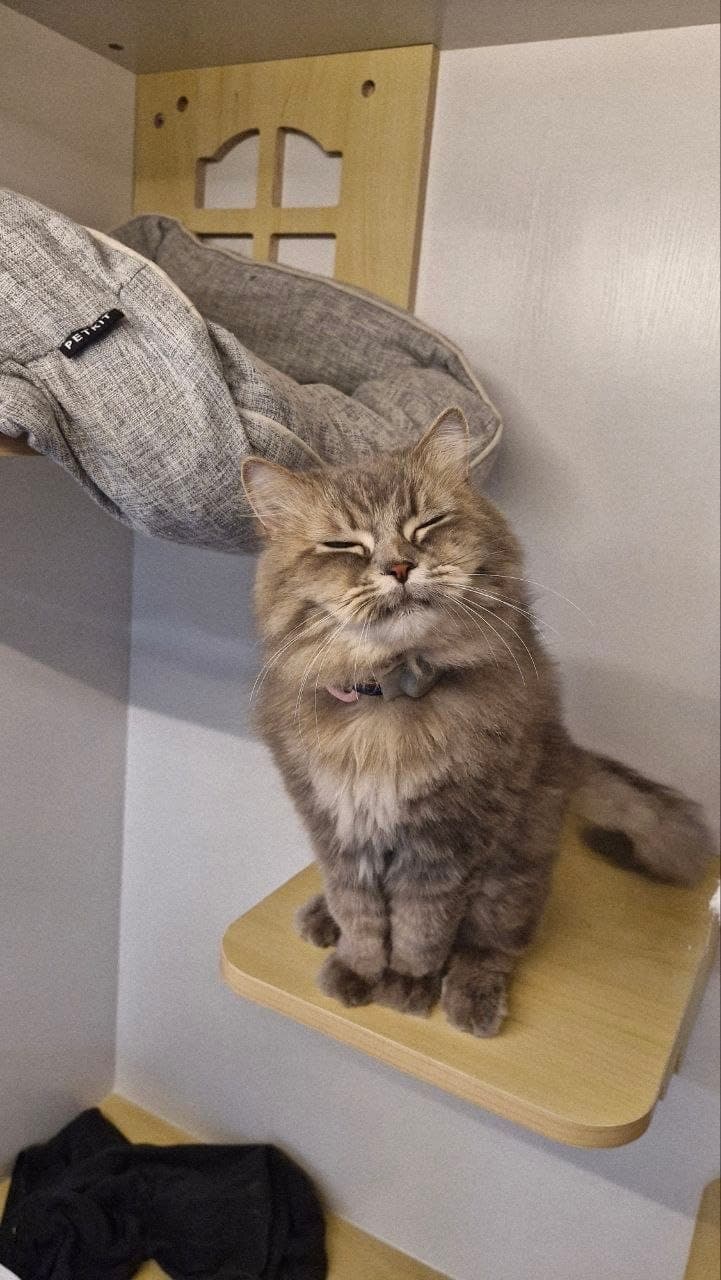
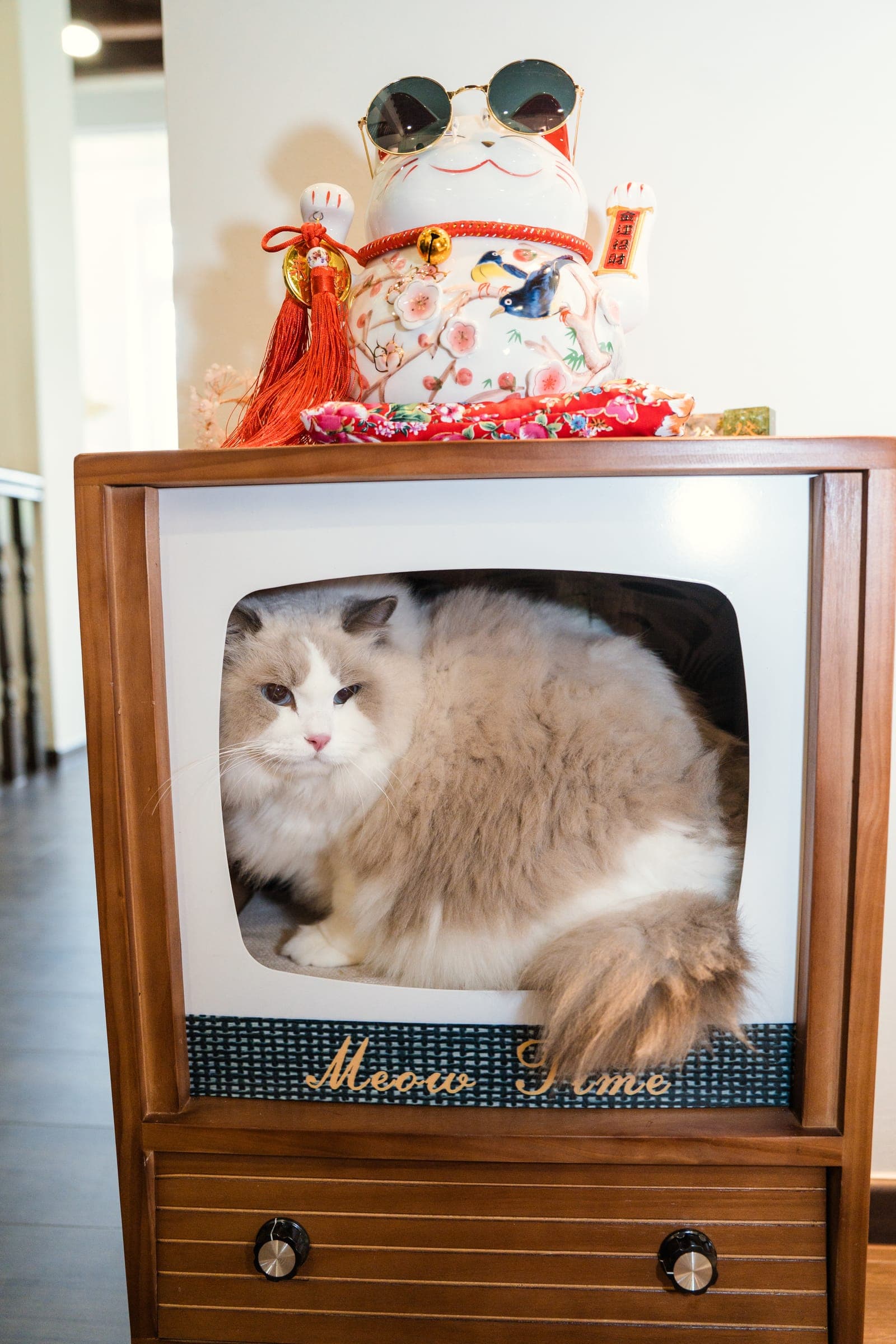
Eyes half shut, front paws tucked: a cat that feels safe enough to relax.
What does a good cat hotel do to keep it small?
The design of the stay does most of the work.
A private suite. Your cat has its own bowls, litter tray, perches and a place to retreat. Cats from one household can share a suite, and other guests are never in the room. Our private suites are built this way, inside the heritage shophouse.
A cat-only building. No dogs, no exceptions, so the soundscape is cat-sized.
A fixed routine. Morning and evening feeding, twice-daily suite cleaning and one-on-one time at set points of the day. Cats settle faster when the day is predictable.
Handling that follows the cat. Our team is trained in Fear Free handling: cats leave the carrier in their own time, and a nervous guest is given space before anyone approaches.
A way for you to see for yourself. Every suite has a camera you log into yourself, and we send a daily photo or video update. Watching your cat sleep at 2 am tells you more than any promise does.
What can you do before the stay?
Preparation is where owners have the most influence. Bring the food your cat already eats, a worn t-shirt or a familiar blanket, and tell the team about hiding spots, stress signals and any triggers. Leave the carrier out at home for a week or two before the stay so that it stops predicting a vet visit. Book a tour so that the hotel is not a total unknown on drop-off day. The full two-week checklist covers the order of it.
At drop-off, keep the goodbye short and calm. Cats pick up on your mood, and a long farewell tells them something is wrong.
What should you ask a hotel about stress?
Ask these, and expect specific answers rather than reassurance.
Is it cat-only, and are the rooms private?
Who handles my cat, and are they trained in low-stress handling?
How do you tell that a cat is stressed, and what do you do about it?
What happens if my cat is not eating by day two?
Can I watch my cat myself, at any hour?
Can I visit first, and can I bring my cat?
So, should you board your cat?
For most healthy adult cats, a well-run hotel is less stressful than the alternatives people picture: a long-haul move, weeks in a flat under renovation, or a sitter dropping in for twenty minutes a day. If you are weighing it against a sitter, this comparison of a cat hotel and a cat sitter sets out the trade-offs. If your cat is elderly, very anxious or unwell, the right answer may be a sitter at home or a vet-supervised stay, and your vet is the person to ask.
Rates are all-inclusive and published on the pricing page, so there is nothing to work out beyond the suite and the number of nights.
Frequently Asked Questions
1Is boarding stressful for cats?▼
Some unease on the first day is normal, because any change of place is a lot for a cat. Most healthy adult cats settle within a day or two, and a private, cat-only suite with a fixed routine removes most of the common stressors.
2How can I tell if my cat is stressed at a cat hotel?▼
Look for a cat that stays frozen in one place, hides for long stretches, refuses food or stops using the litter tray. A cat that begins to explore, eat and use the litter tray is settling, and a good team will tell you before you ask if it is not.
3How long can a cat go without eating while boarding?▼
A dip in appetite on day one is common. At 36 hours without food, call the hotel for an update and talk to your vet if it continues.
4What makes cat boarding less stressful?▼
A private suite, a cat-only building, a predictable daily routine, handling that follows the cat's signals, familiar food and bedding from home, and a tour before the stay so the place is not entirely new on drop-off day.
5Should an anxious or elderly cat be boarded?▼
Talk to your vet first, and tell the hotel about any medical condition or past bad stay before you book. For some cats a sitter at home or a vet-supervised stay is the better choice.